
Hisense tumble dryer repair guide
Hisense tumble dryer changed its behaviour? Identify vented, condenser or heat-pump equipment if known; note the programme and whether the load is warm. Prepare the model and postcode before arranging work.
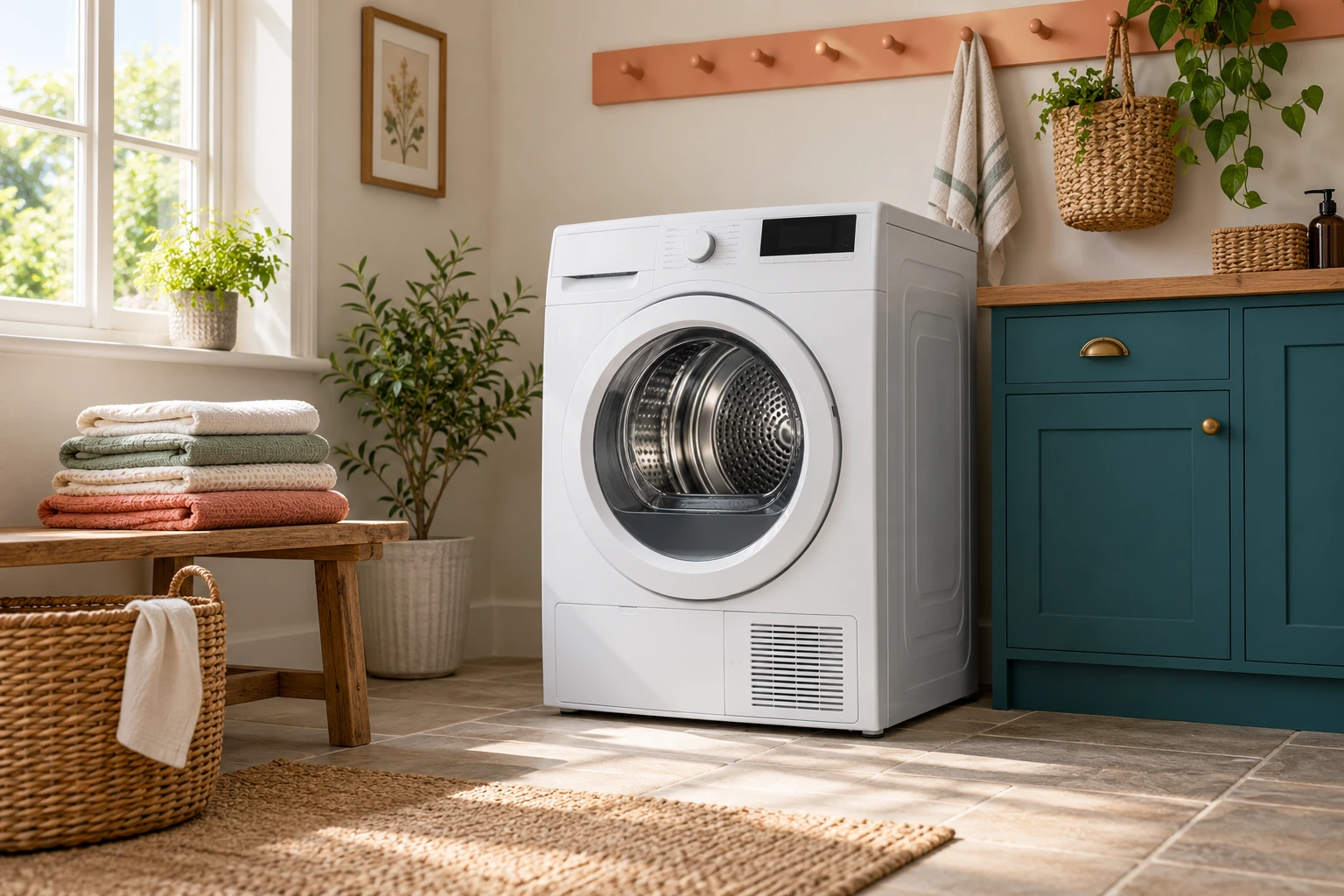
Put the Hisense fault into words.
Drying is a balance of movement, heat and airflow. Start with the result you can see.
A cold load, an unexpectedly short cycle and a drum that stays still are separate starting points.
Identify vented, condenser or heat-pump equipment if known; note the programme and whether the load is warm.
What has changed?
These are possible assessment areas, rather than a diagnosis or an instruction to dismantle the appliance.
Clothes stay cold and damp
Does the drum turn and which programme is selected?
Heating control, airflow or protection devices may need examination.
The drum stays still
Is there a display, click or hum when starting?
Door sensing, drive components or control can produce this symptom.
The dryer finishes unusually early
Does it happen on timed and sensor selections alike?
Moisture sensing, programme choice or protection may be involved.
Drying takes much longer
Is the load appropriate and routine care up to date?
Air movement, temperature and sensing all affect drying time.
A tank or water warning appears
Note the exact symbol and whether the tank arrangement changed.
Collection, drainage or sensing may need assessment.
The dryer seems too hot
Stop using it, particularly if there is a burning smell.
Heat and airflow faults require assessment before further operation.
Make the model useful.
Use the complete model, serial and any additional product reference on the accessible rating label. The same badge can cover several generations of equipment.
A door-frame label and a photograph of the front are enough to begin; do not remove panels.
Choose the address area.
At the worktop
Say whether a work surface or adjacent cupboard limits movement. The engineer needs an honest view of the fitting, rather than a pulled-out machine.